2026/03/06 03:08
(English below)
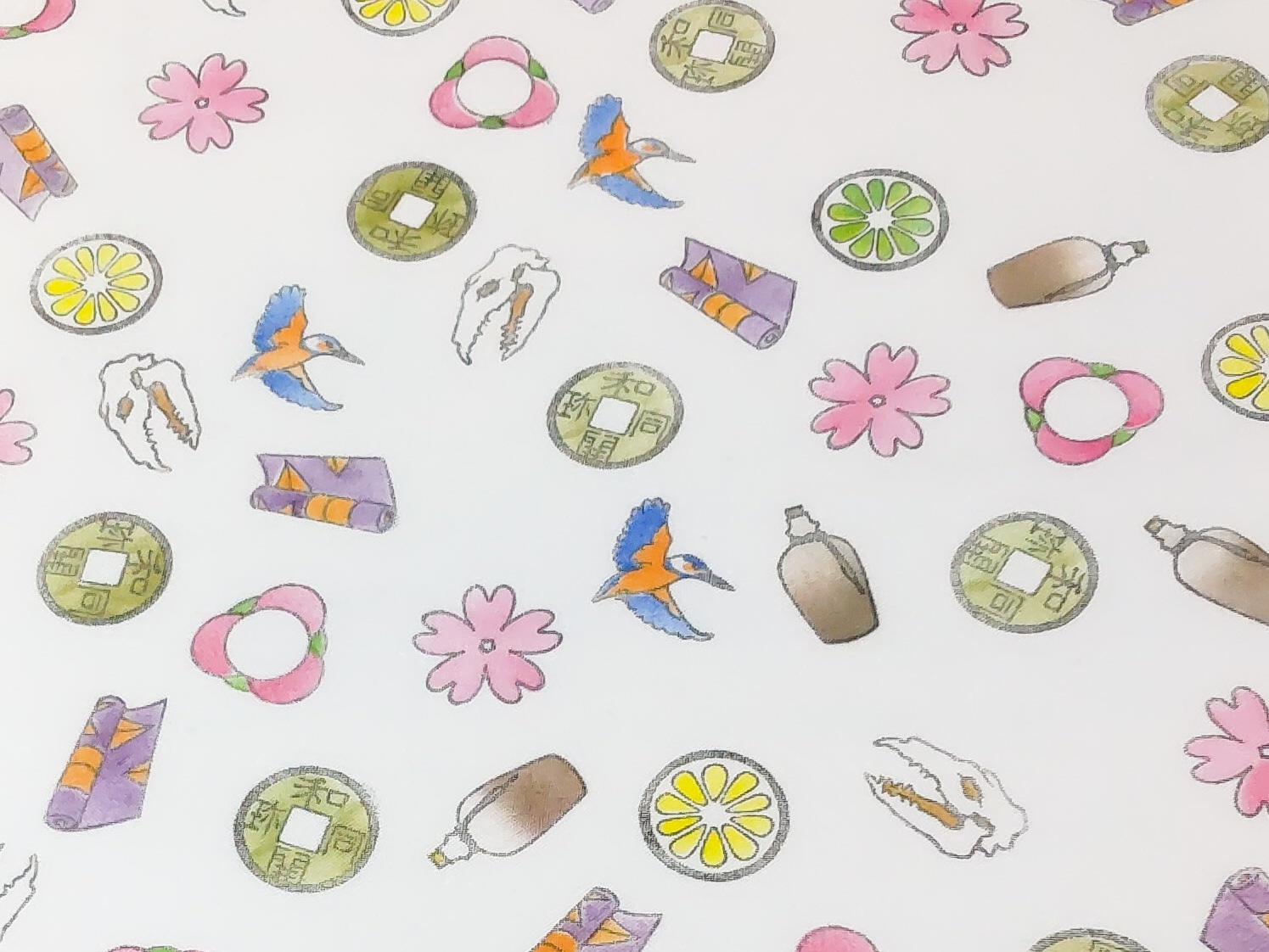
「宝尽くし」という縁起の良い宝物を集めた吉祥文様を、秩父にあわせて再構築しました。
大地の記憶、人の営み、自然の便り──地質、自然、産業をテーマに、秩父が育んだ8つの宝を選んでいます。
宝尽くしとは、縁起のいい宝物を集めた、吉祥柄です。
室町時代に中国から伝わった「八宝」を日本風にアレンジしたもので、幸福や長寿、富などの願いが込められています。
〇武甲山:秩父を象徴する山で、石灰岩が採掘されています。石灰岩は、生物の骨や殻などが海底に堆積してできます。
〇化石:パレドパラドキシアなど、海だった時代の名残を彷彿とさせる化石が発掘されています。
〇和同:飛鳥時代に日本ではじめて、高純度の銅が採掘されました。元号を和同に改め、和同開珎を鋳造、流通させました。
武甲山の図案は、質問が多いです。「なんで、こうなったの?」と。
実のところ、図案を作るとき、武甲山は結構悩みました。
武甲山は日々削られているのでアステカ文明の遺跡のような形でカッコいいのですが、それは近年、人間の手によるもの。
もっと武甲山そのものを、形にしたいなぁ...と思い、炭酸カルシウムの分子モデルを基に、図案化しました。
室町時代に中国から伝わった「八宝」を日本風にアレンジしたもので、幸福や長寿、富などの願いが込められています。
地質カテゴリー
秩父は今でこそ四方を山に囲まれる盆地ですが、太古の昔は海でした。そんな大地の記憶です。〇武甲山:秩父を象徴する山で、石灰岩が採掘されています。石灰岩は、生物の骨や殻などが海底に堆積してできます。
〇化石:パレドパラドキシアなど、海だった時代の名残を彷彿とさせる化石が発掘されています。
〇和同:飛鳥時代に日本ではじめて、高純度の銅が採掘されました。元号を和同に改め、和同開珎を鋳造、流通させました。
武甲山の図案は、質問が多いです。「なんで、こうなったの?」と。
実のところ、図案を作るとき、武甲山は結構悩みました。
武甲山は日々削られているのでアステカ文明の遺跡のような形でカッコいいのですが、それは近年、人間の手によるもの。
もっと武甲山そのものを、形にしたいなぁ...と思い、炭酸カルシウムの分子モデルを基に、図案化しました。
自然カテゴリー
山々に囲まれた土地ならではの、自然からの便りです。
〇チチブイワザクラ:サクラソウの一種ですが、武甲山にだけ自生する絶滅危惧種です。
〇カワセミ:目標達成など、縁起の良い鳥とされています。水の綺麗な川辺などで、見ることができるようです。
〇チチブイワザクラ:サクラソウの一種ですが、武甲山にだけ自生する絶滅危惧種です。
〇カワセミ:目標達成など、縁起の良い鳥とされています。水の綺麗な川辺などで、見ることができるようです。
産業カテゴリー
秩父の大地と自然によって育まれた、人の営みです。
〇秩父銘仙:古くから養蚕が盛んで、織物業へと発展していきました。
〇酒:美味しい水のおかげでしょうか。日本酒だけでなく、ウイスキー、ワインなど、様々な地酒が作られています。
〇酒:美味しい水のおかげでしょうか。日本酒だけでなく、ウイスキー、ワインなど、様々な地酒が作られています。
〇かぼす:通常は緑ですが、秩父のかぼすは黄色。緑も食べないわけではないので、たまに緑も入っています。
なぜ、かぼすが作られるようになったのか。なぜ、黄色なのか。背景を知ると、エリアならではの「人の営み」が見えてきます。
秩父の宝シリーズは、木を彫って版をつくり、ひとつひとつ捺して、さらに型を重ね、刷毛で色彩を施す…という工程で作っています。
刷毛で少しずつ彩色するので、捺染とは違った色の濃淡を表現できるのが魅力です。
手仕事だからこそ、同じ柄でも少しずつ違う表情が生まれます。
This design is inspired by Takara-zukushi, a traditional Japanese auspicious pattern that gathers various lucky treasures.
For this work, the motif has been reinterpreted to reflect the unique culture and landscape of Chichibu.
Themes of geology, nature, and local industry come together in this design, representing eight treasures nurtured by the land and people of Chichibu—echoes of the Memories of the Land, Nature's Tidings, and the Human Endeavors built upon them.
Takara-zukushi originated from the “Eight Treasures” (Ba Bao) motif introduced from China during the Muromachi period. In Japan it evolved into a popular decorative pattern symbolizing good fortune, longevity, prosperity, and happiness.
Geology
Although Chichibu is now a basin surrounded by mountains, it was once part of the ocean in ancient times. These motifs reflect the memory of that ancient landscape.
Mt. Bukō
A symbolic mountain of Chichibu where limestone is actively quarried. Limestone forms from the accumulation of marine organisms such as shells and skeletons on the seabed.
Fossils
Fossils such as Paleoparadoxia have been discovered here, reminding us of the time when this land was under the sea.
Copper
During the Asuka period, high-purity copper was discovered in this region. In celebration, the era name was changed to Wadō, and the famous Wadō-Kaichin coins were minted and circulated.
Many people ask about the design of Mt. Bukō:
“Why does it look like this?”
When creating the motif, the mountain was actually quite difficult to represent. Its stepped shape—resembling an ancient ruin—is the result of modern limestone mining. Instead of depicting only this recent form, I wanted to represent the mountain itself more fundamentally.
So the design was inspired by the molecular structure of calcium carbonate, the main component of limestone.
Nature
These motifs represent the natural beauty that thrives in this mountain-surrounded region.
Chichibu Iwazakura
A rare species of primrose that grows only on Mt. Bukō. It is now considered an endangered plant.
Kingfisher
In Japan, the kingfisher is often regarded as a bird of good fortune and success. It can sometimes be seen along the clear rivers of Chichibu.
Local Industry
These motifs reflect the livelihoods shaped by Chichibu’s land and nature.
Chichibu Meisen
Sericulture has long been practiced in this region and eventually developed into a thriving textile industry.
Sake and Local Spirits
Thanks to the region’s high-quality water, Chichibu produces a variety of beverages, including sake, whisky, and wine.
Kabosu Citrus
Kabosu is usually green, but in Chichibu it is often yellow when harvested. Green ones are sometimes included as well.
The reasons why kabosu came to be cultivated here—and why it is often yellow—reveal interesting aspects of the region’s local history and livelihoods.
The series is created through a traditional hand-printing process.
Woodblocks are carefully carved by hand and printed onto the fabric one by one.
Additional stencil layers are then applied, and colors are brushed in by hand.
Because the colors are applied with a brush rather than industrial printing, subtle variations in tone naturally appear.
This handcraft process gives each piece a slightly different expression, making every item unique.